Whimsy Christmas Tree: A Designer's Real-World Review
As a designer who has spent years curating assets for both personal crafting and commercial production, I approach every new machine embroidery design with a specific set of questions. Does it translate well from screen to fabric? Will it hold up after washing? And most importantly, does it add genuine value to the finished product? When I first opened the file for Whimsy Christmas Tree, I was immediately drawn to its promise of holiday magic. But in the world of professional stitching, magic needs to be backed by technical reliability. This review breaks down how this design performs when moved from a digital preview to a real-life project.
The First Impression: Mood and Visual Personality
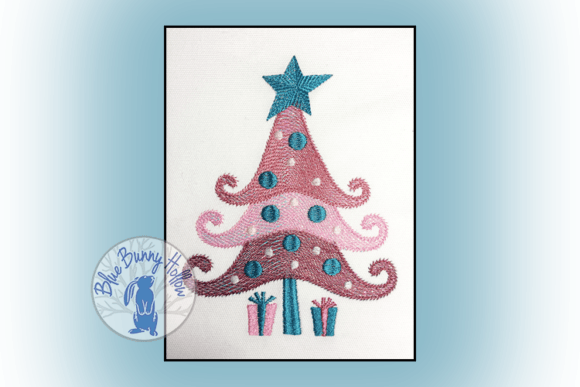
The moment you view the digitized outline of Whimsy Christmas Tree, the intent is clear. It is not a rigid, traditional tree; it leans into a playful, slightly abstract aesthetic that feels perfect for modern holiday decor. The description highlights the use of Mylar for a shimmery appearance, which suggests a design built to catch the light. In my experience, designs that incorporate reflective elements like Mylar require careful planning regarding thread tension and backing, but the payoff is a unique texture that separates a mass-produced item from a high-end handmade product.
Visually, the layout feels balanced without being overly symmetrical. This asymmetry is often what makes an embroidery file feel organic rather than stamped. For a small business owner or an Etsy seller looking to differentiate their Christmas collection, this whimsical vibe offers a distinct alternative to the standard red-and-green motifs found on every shelf. The detail level appears moderate, avoiding the trap of excessive complexity that can lead to thread breaks on textured fabrics.
Testing the Design: A Real-Life Tote Bag Scenario
To truly understand the utility of Whimsy Christmas Tree, I visualized a specific project: a heavy-duty canvas tote bag intended as a premium holiday gift or a boutique shop merchandise item. Tote bags are a staple for craft businesses because they are practical, visible, and durable. However, they also present challenges due to their woven texture and potential for shifting during stitching.
In this scenario, placing the tree near the bottom corner of the bag allows the design to anchor the composition. The "whimsy" aspect shines here because the organic lines of the tree would contrast beautifully against the straight weave of the canvas. If I were using this for a custom apparel line, perhaps on a sweatshirt, I would consider the placement carefully. On a curved surface like a chest pocket or the side of a hoodie, the design's flow matters immensely. Since the tree has a vertical orientation, it works naturally with the drape of a garment, provided the stitch density isn't so high that it causes puckering on stretchy fabric.
For a client requesting a personalized gift, such as a baby blanket or a nursery pillow cover, the softness of the design is a major asset. Unlike sharp, geometric patterns, the rounded edges of Whimsy Christmas Tree feel safe and cozy, making it ideal for baby embroidery. The shimmer from the Mylar accents could serve as a delightful surprise element that parents notice once the child interacts with the item under holiday lights.
Navigating Technical Challenges and Fabric Choices
While the design is versatile, there are specific situations where caution is required. As a reviewer, I always advise testing any digital embroidery file on scrap fabric first. With Whimsy Christmas Tree, the inclusion of Mylar means you are working with a material that behaves differently than standard rayon or polyester thread. You must ensure your machine's tension is adjusted to accommodate the slickness of the Mylar to prevent looping or skipped stitches.
Fabric texture plays a critical role here. On a smooth cotton or linen blend, the design will likely pop with clarity. However, on thick, nubby fabrics like chunky knit sweaters or heavy fleece, the fine details of the tree might get lost in the pile of the yarn. In those cases, I would recommend increasing the size of the hoop slightly to allow for better stabilizer support, ensuring the fill stitch areas remain solid and the satin stitch outlines stay crisp.
Dark fabrics present another consideration. While the shimmer of the Mylar is fantastic on dark backgrounds, the base thread colors need sufficient contrast. If the design relies heavily on white or light green threads on a black background, the thread colors must be vibrant enough to stand out. Conversely, on very light fabrics, the Mylar effect might be less pronounced unless the lighting is direct. Always check whether the design works for both personal and commercial projects by creating a printable mockup in black and white to assess the tonal balance before committing to expensive materials.
Key Considerations for Specific Projects
- Small Hoop Sizes: Ensure the design scales down without losing the definition of the branches. Tiny lettering or intricate corners can become muddy if the hoop is too small.
- Stretchy Fabrics: Use a tear-away or cut-away stabilizer appropriate for knits to prevent distortion. The tree's shape should remain upright, not warped by the fabric's elasticity.
- Curved Surfaces: For caps or hats, verify that the design doesn't cross seams. The whimsical nature of the tree might look disjointed if stitched across a panel seam.
- Dense Stitch Areas: Check the stitch density in the center of the tree. Overly dense fills can stiffen the fabric, which is undesirable for items like tea towels or aprons that need to remain pliable.
Impact on Brand Value and Customer Trust
For the creative entrepreneur, the choice of design directly impacts brand consistency and customer trust. Using a high-quality asset like Whimsy Christmas Tree signals professionalism. Customers buying a personalized gift or a small shop product expect a finished piece that looks intentional and polished. If the stitching is clean and the design fits the aesthetic of the brand, it enhances the perceived value of the item.
Furthermore, the uniqueness of the design aids in buyer engagement. In a saturated market filled with generic holiday motifs, a whimsical tree with shimmering accents stands out in social media photos and Etsy listings. It invites customers to imagine the item in their own homes, whether as a festive kitchen towel or a decorative embroidered patch on a denim jacket. This emotional connection drives sales and encourages repeat business.
Practical Notes for the Designer
Before integrating Whimsy Christmas Tree into your workflow, take these steps to ensure success:
- Test Run: Stitch a test version on the exact fabric and stabilizer combination you plan to use. Inspect the back of the work for loose threads or excessive stabilizer residue.
- Licensing Check: Confirm the licensing terms. Are you allowed to sell the finished product? Can you use it for commercial embroidery in unlimited quantities? Never assume; always read the license agreement attached to the embroidery file.
- Color Palette: Experiment with different thread colors beyond the standard red and green. Perhaps a metallic silver or a deep navy could offer a fresh take on the holiday theme while maintaining the whimsical feel.
- Hoop Size Verification: Double-check the dimensions against your available hoops. If the design requires a larger hoop than you have, do not force it; resize it only if the digitization supports scaling without quality loss.
In conclusion, Whimsy Christmas Tree is a strong contender for designers seeking a blend of charm and functionality. It bridges the gap between a cute hobbyist project and a viable design asset for a serious craft business. By respecting the technical requirements of the Mylar elements and choosing the right fabric applications, you can create holiday items that truly capture the season's spirit while delivering the quality your customers expect.